Active
Morocco Walking Tours: Medinas, Mountains, and How Hard They Really Are
Co-founder & lead guide, Beyond the Riad
We run these walks ourselves — medina half-days and High Atlas treks — so the difficulty calls below come from the trail, not a brochure.
- 12 yrs
- guiding the Atlas and the medinas
- ~1,900
- trips run since 2014
- 1 in 5
- Toubkal first-timers who turn back at the refuge
Last walked: High Atlas (Imlil) and the Fez medina, autumn 2025.
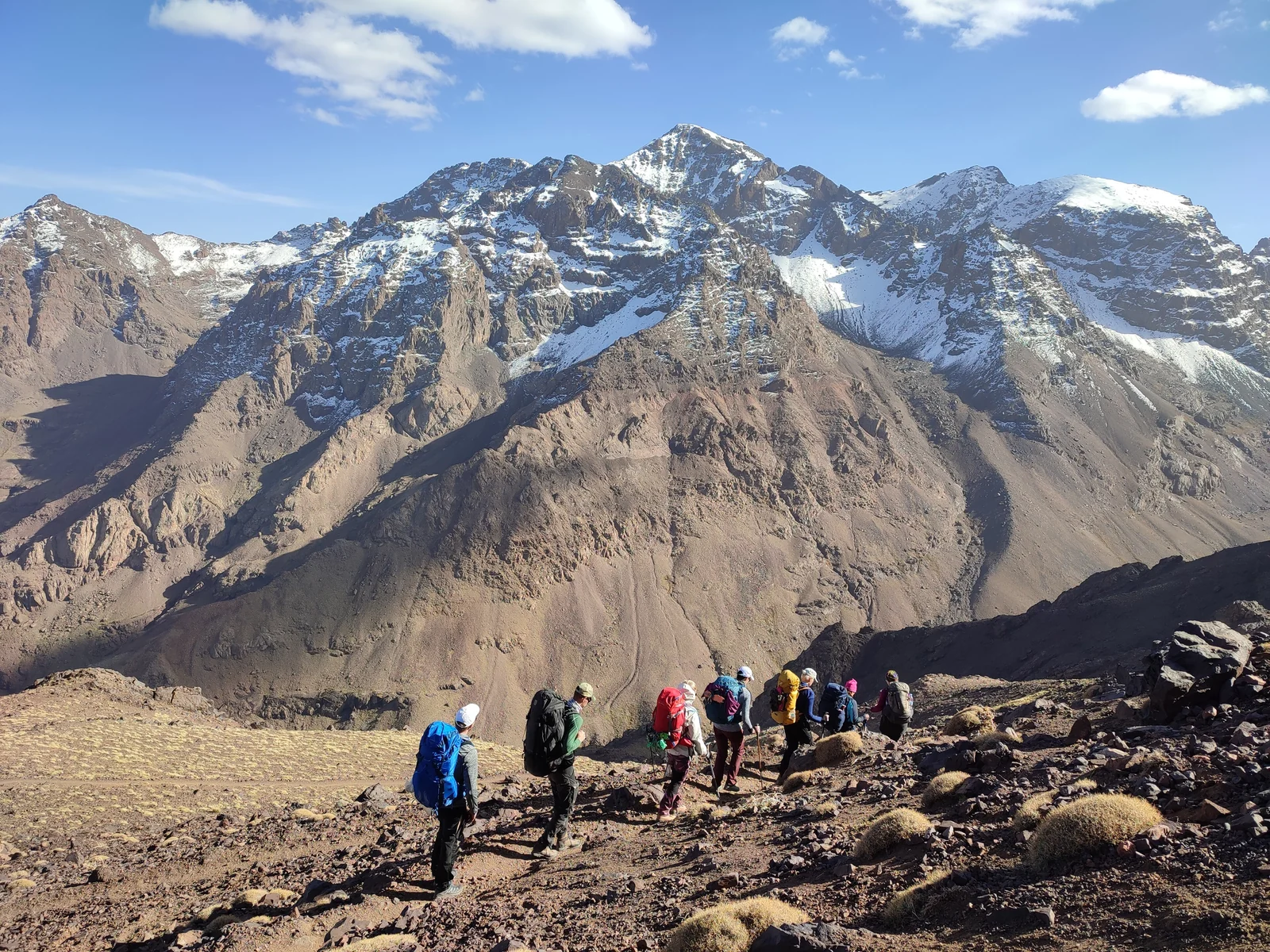
Walking in Morocco splits into two things people lump together: easy medina walks in cities like Fez and Marrakech, and real mountain treks in the High Atlas and the Rif. Most guided walking tours run 5–8 days and mix both. You genuinely need a guide for the Fez medina and for any Atlas trek; coastal towns and Chefchaouen you can wander solo.
When people search "Morocco walking tours" they mean two completely different holidays. One is a gentle wander through old cities with a lot of mint tea. The other is a thigh-burning climb to 4,000 metres with a mule carrying your bag. Booking the wrong one is how you end up in hiking boots in a souk, or in canvas trainers halfway up a mountain.
Here’s how the walking actually breaks down, how hard each kind really is, and where a guide is the difference between a great day and a lost afternoon.
The two kinds of walking in Morocco
Almost every walking trip here is some blend of two things:
- Medina walks — flat, cultural, on cobbles and through souks. The "tour" is the navigation and the stories, not the exertion. Half a day each in Fez and Marrakech.
- Mountain treks — the High Atlas and the Rif, from gentle valley walks to multi-day summit pushes. This is where fitness, season and a proper guide start to matter.
A good 5–8 day "walking tour of Morocco" usually strings together a couple of medinas, a stretch of the Atlas, and sometimes a night in the desert. Know which bits are the hard bits before you book.
| Walk | Effort | Time | Our take |
|---|---|---|---|
| Medina walk (Fez, Marrakech) | Easy, flat | Half day | Anyone — wear flat shoes, not boots |
| Valley walk (Imlil, Ourika) | Easy–moderate | Half/full day | Best all-rounder; minimal kit |
| Mountain pass day | Moderate | 5–6 hrs | Want a decent level of fitness |
| Toubkal summit | Hard | 2 days | Real fitness and a guide; 1 in 5 turn back |
Medina walks: Fez and Marrakech
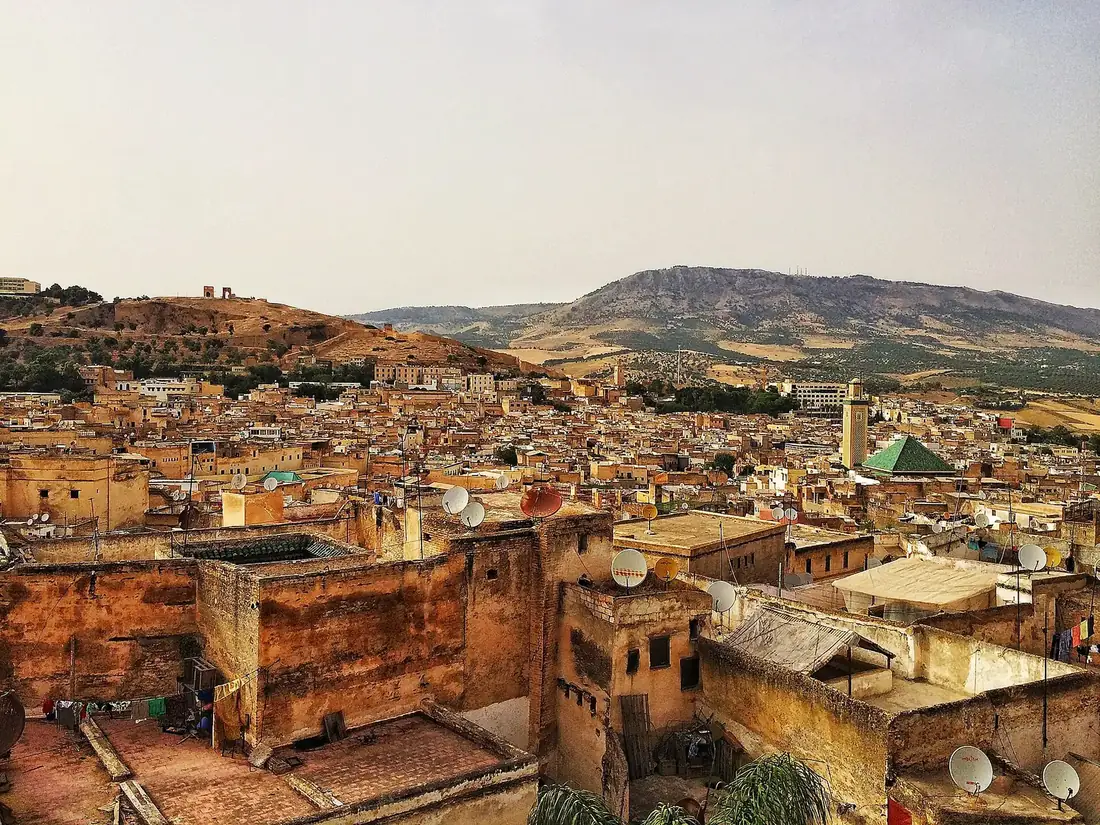
The Fez medina is the one walk in Morocco where we’ll insist on a guide — not for safety, but because it’s roughly 9,000 lanes with no logic and no street signs, and the "free guide" who finds you will deliver you to his cousin’s carpet shop. A good guide turns a stressful maze into the best half-day in the country, from the Chouara tanneries to the Qaraouiyine, founded in 859.
Marrakech is easier to freelance — the medina and souks are smaller and the Jemaa el-Fnaa is an obvious anchor — but a guide still saves you the hassle and the haggling. Both are flat. Wear comfortable shoes, not hiking boots; you’re walking on stone, not scrambling.
The High Atlas: valley walks to Toubkal
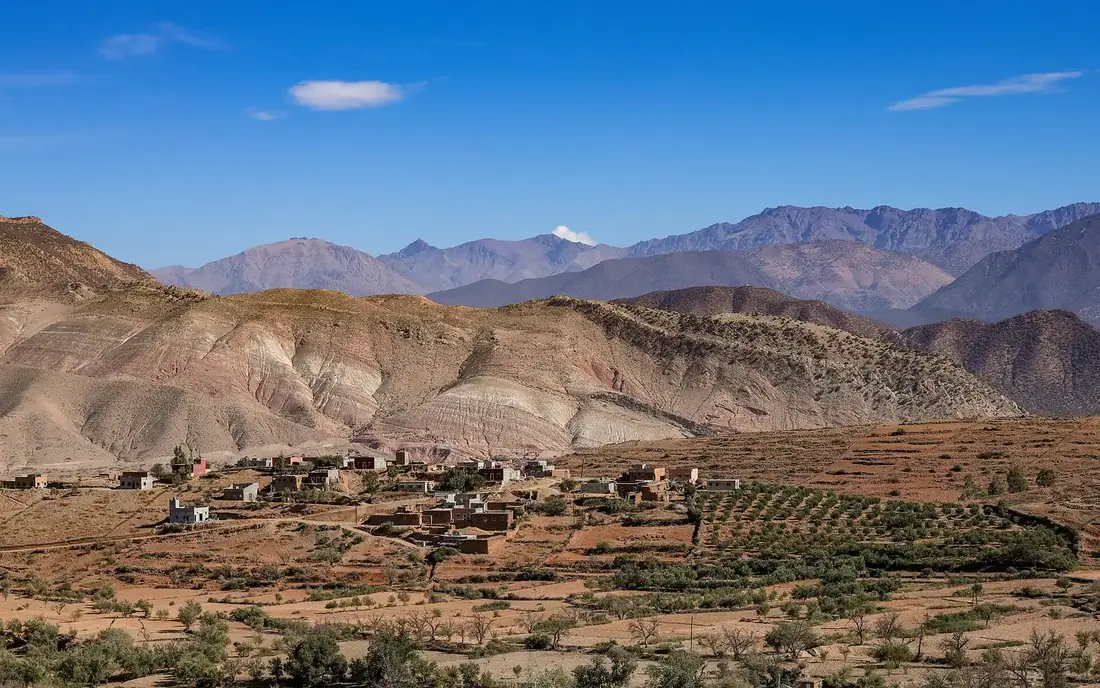
This is the real trekking. An hour from Marrakech, the Atlas valleys around Imlil and Ourigane offer everything from flat strolls past Berber villages and walnut groves to the two-day climb up Mount Toubkal — at 4,167 m, the highest peak in North Africa.
- Easy: a half-day valley walk from Imlil or Setti Fatma. Mostly flat, fine for anyone who walks regularly. No special kit.
- Moderate: a full day to a mountain pass or a higher village — 5–6 hours, real ascent, worth a decent level of fitness.
- Hard: Toubkal itself. Two days, a night in a refuge at 3,200 m, an alpine pre-dawn start, and altitude that makes the last hour brutal. No ropes needed, but you must be fit and have a guide.
Toubkal is a trek, not a technical climb, but people underestimate the altitude every week. If you don’t walk much at home, do the valley days and skip the summit — the views from halfway are most of the reward without the suffering.
A non-technical but genuinely tough two-day trek. After watching roughly 1 in 5 first-timers turn back at the refuge, we pre-screen fitness and happily point casual walkers to the valley days instead — most of the reward, far less of the suffering.
Every week in season we meet someone in hiking boots lost in the Fez souk, or in canvas trainers halfway up a mountain. Booking the right walk is the whole game — and the bit a brochure won’t tell you.
The Rif and the north
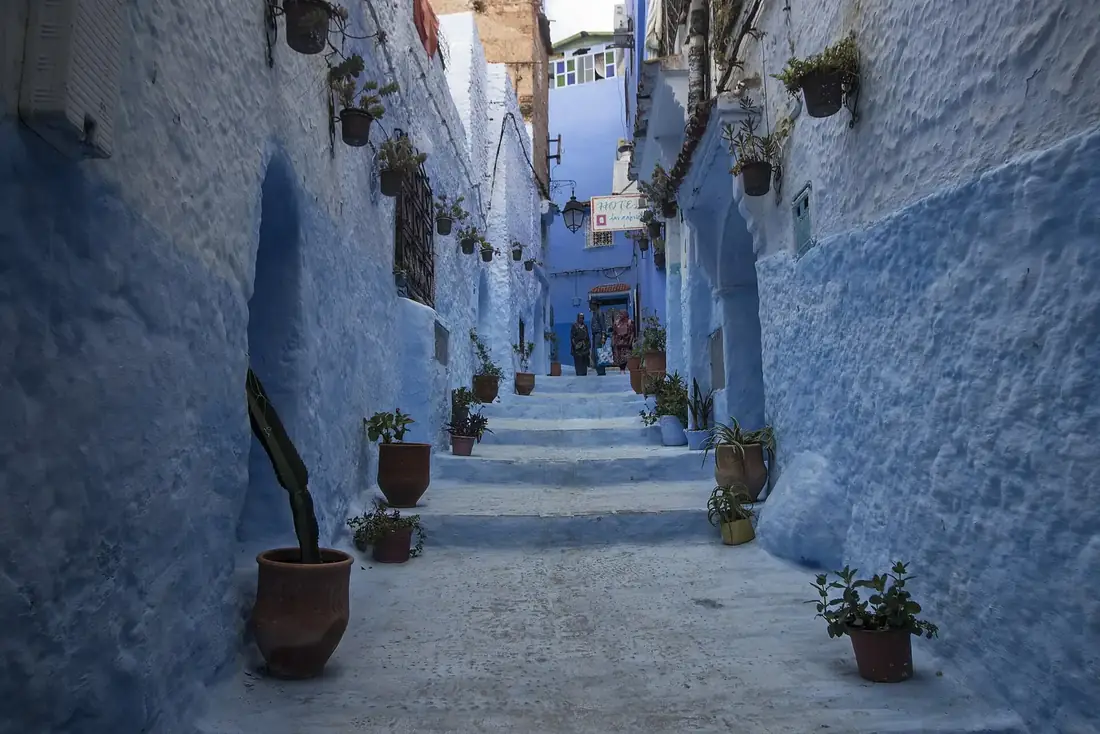
The Rif mountains in the north are greener, lower and far quieter than the Atlas. Chefchaouen — the blue city — is the base, and you can walk straight out of town up to the Spanish Mosque for the view, or further into Talassemtane National Park to the Akchour waterfalls and the natural arch of God’s Bridge. These are day walks, not expeditions: a few hours, moderate, gorgeous, and you’ll meet a fraction of the crowds you would in the Atlas.
Walking in the desert is a different beast
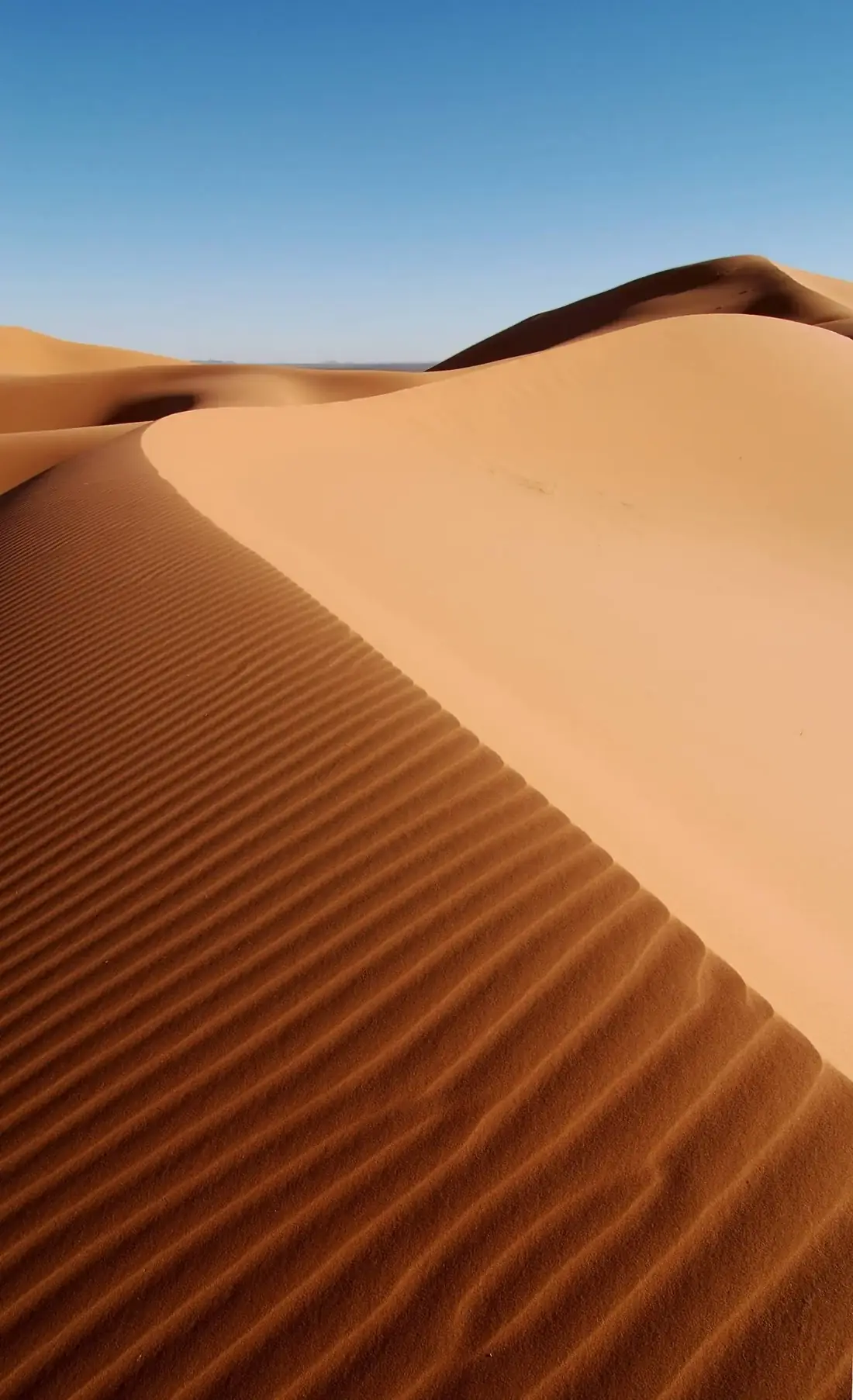
Walking on dunes looks easy and isn’t — soft sand is hard work, and midday heat in the Sahara near Merzouga is no place for a hike. Desert "walking" is really a short sunset or sunrise stroll between camps, often alongside a camel doing the actual carrying. Treat it as an experience, not a trek, and save your legs for the mountains.
How many days, how fit, guided or solo
Quick answers to the questions everyone asks before booking:
- How many days? A dedicated walking tour runs 5–8 days. For a taste, two days in the Atlas from Marrakech is plenty.
- How fit? Medina and valley walks suit anyone who walks regularly. Full mountain days and Toubkal want genuine fitness and a bit of training.
- Guided or solo? Guide essential for the Fez medina and any Atlas trek. Optional for Marrakech, Chefchaouen and coastal towns.
Best season and what to pack
Spring (March–May) and autumn (September–November) are ideal for most walking — comfortable cities, green valleys, clear mountains. High summer is good for the High Atlas (it’s cooler up there) but brutal in the medinas and the desert. Winter brings snow to Toubkal, which then needs crampons and an experienced guide.
- Layers — mountain mornings are cold even in spring; afternoons are warm.
- Real walking shoes for the mountains; comfortable flat shoes for the medinas.
- Sun cover — hat, sunscreen, and a scarf for dust and sun.
- Cash in dirham — for tips, mint tea, and the odd village stop where cards are a rumour.
New to the country? Start with how to choose a Morocco tour, then see the rest of the highlights in what to do in Morocco.
Häufige Fragen
Is Morocco good for walking and hiking?
Very. It ranges from flat medina walks in Fez and Marrakech to serious High Atlas trekking, including Toubkal (4,167 m), North Africa’s highest peak, plus gentler green trails in the Rif.
How hard is it to climb Mount Toubkal?
It’s a non-technical two-day trek — no ropes — but the altitude and a pre-dawn summit push make it genuinely tough. You need good fitness and a guide; beginners should stick to valley walks.
Do you need a guide to walk in Morocco?
For the Fez medina and any Atlas trek, yes. Marrakech, Chefchaouen and coastal towns you can comfortably explore on your own.
What is the best time of year for a Morocco walking tour?
Spring (March–May) and autumn (September–November) for most of the country. Summer suits the High Atlas but is too hot for medinas and the desert; winter brings snow to Toubkal.
How many days do you need for a walking tour of Morocco?
Dedicated walking trips run 5–8 days, mixing medinas, the Atlas and sometimes the desert. Two days in the Atlas from Marrakech is enough for a taste.
How fit do you need to be?
Medina and valley walks suit anyone who walks regularly. Full mountain days and Toubkal require real fitness; train beforehand if you don’t hike often.
Sollen wir die Logistik übernehmen?
Wir fahren diese Routen täglich. Nennen Sie uns Ihre Daten und wir bauen die Reise um Sie herum.
Youssef was born and raised in Fez and has guided travelers across Morocco for more than 12 years — from the Erg Chebbi dunes to the High Atlas passes. He co-founded Beyond the Riad to run honest, well-paced private trips with local drivers and guides.
Mehr über unsDie Abschnittsfotos stammen von Wikimedia Commons unter den jeweiligen Creative-Commons-Lizenzen; die Credits stehen unter jedem Bild.