Food
Moroccan Food: The Dishes to Try and How to Eat Like a Local
Co-founder & lead guide, Beyond the Riad
Every dish and every rule below comes from meals we book, sit through and pay for on our own trips — a Fez-born lead guide and seven city guides who order in Darija.
- ~1,900
- private trips run since 2014 — breakfasts, camp dinners and city meals included
- ~6,200
- travelers guided, and fed, since we started
- 7
- licensed city guides — Fez, Marrakech, Rabat, Tangier, Chefchaouen
Where-to-eat calls below are ours, not a recipe database’s.
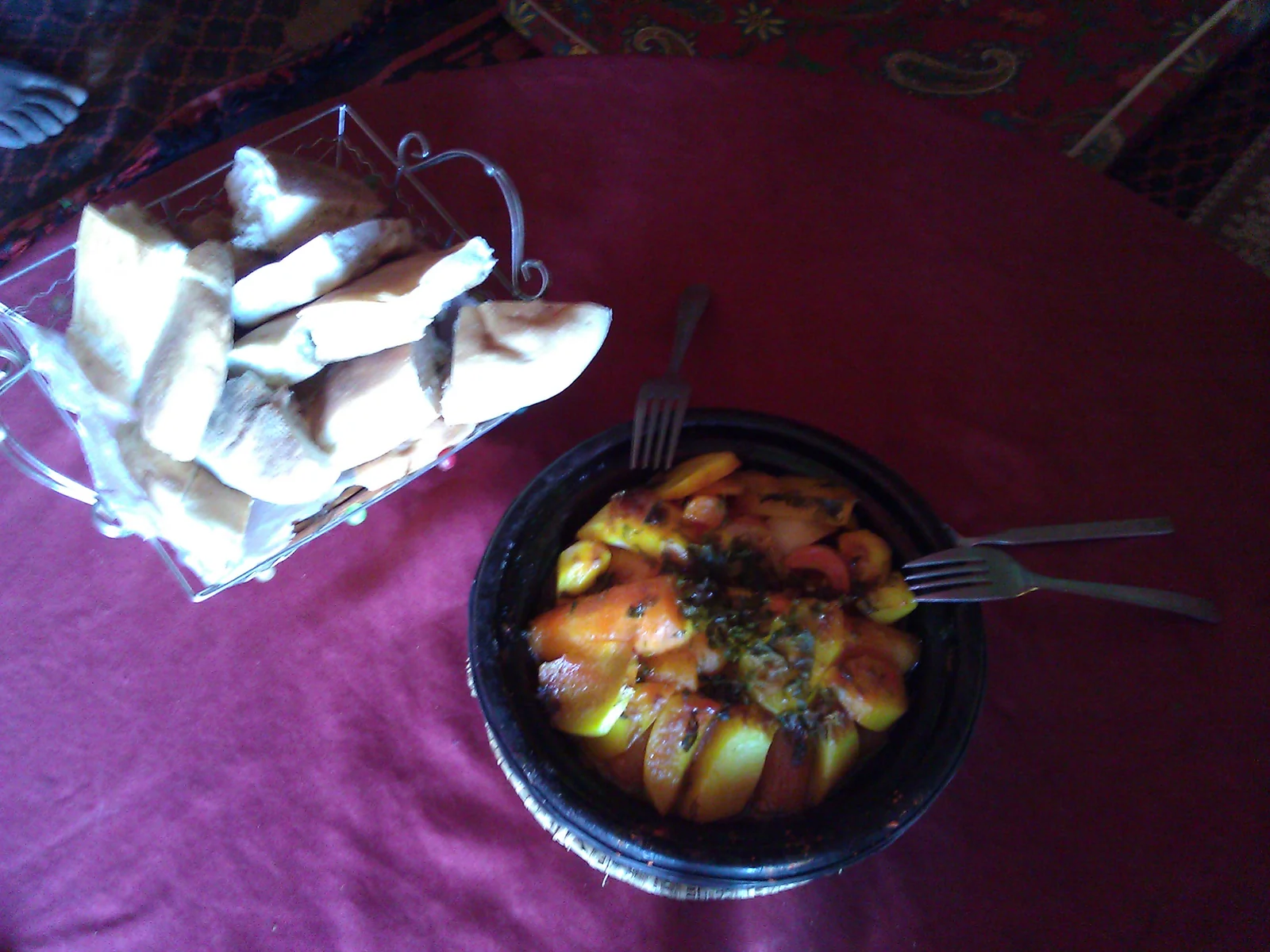
The Moroccan dishes worth seeking out are tagine (a slow-cooked stew named after its conical clay pot), couscous (traditionally the Friday family meal), pastilla (a sweet-savoury pie), harira soup, and grilled brochettes — finished with mint tea. Eat tagine with bread rather than cutlery, order couscous on a Friday, and a vegetarian will eat very well here.
Moroccan food is one of the best reasons to come and one of the most misunderstood. Most visitors eat three tagines in a row at tourist cafés and leave thinking that is the cuisine — when tagine is one technique among many, and often not the best thing on the menu.
Two numbers explain most of the bad meals. The average visitor stays about three nights in Morocco, and 31% of our own travelers tell us afterwards that their single biggest regret was trying to do too much. The first thing a rushed day costs you is lunch: you end up eating wherever you happen to be standing at 2pm, which in a medina is almost always the wrong place.
Here is what to actually order, how a Moroccan meal is built, where the real flavour lives (frequently on the street), and how to eat well whether you are vegetarian, cautious, or here to try everything.
Tagine: the dish and the pot
Tagine is two things at once: the shallow clay pot with the tall conical lid, and the slow-cooked stew inside it. The cone traps steam and returns it to the pot, so meat and vegetables braise gently for hours into something tender and deeply spiced. The word covers a whole family of dishes, not one recipe.
The ones to know: chicken with preserved lemon and olives; lamb or beef with prunes and almonds (sweet and savoury at once); and kefta — meatballs in tomato sauce with eggs cracked on top. Eat it the local way, with bread torn and used to scoop, not a knife and fork. The bread is the cutlery.
The thing I see most often in season is a table working through their third near-identical chicken tagine of the trip, in a café with photographs on the menu, a hundred metres from a place doing proper mechoui. Ask your driver where he eats. He will not choose anywhere with pictures on the menu, and he will not be wrong.
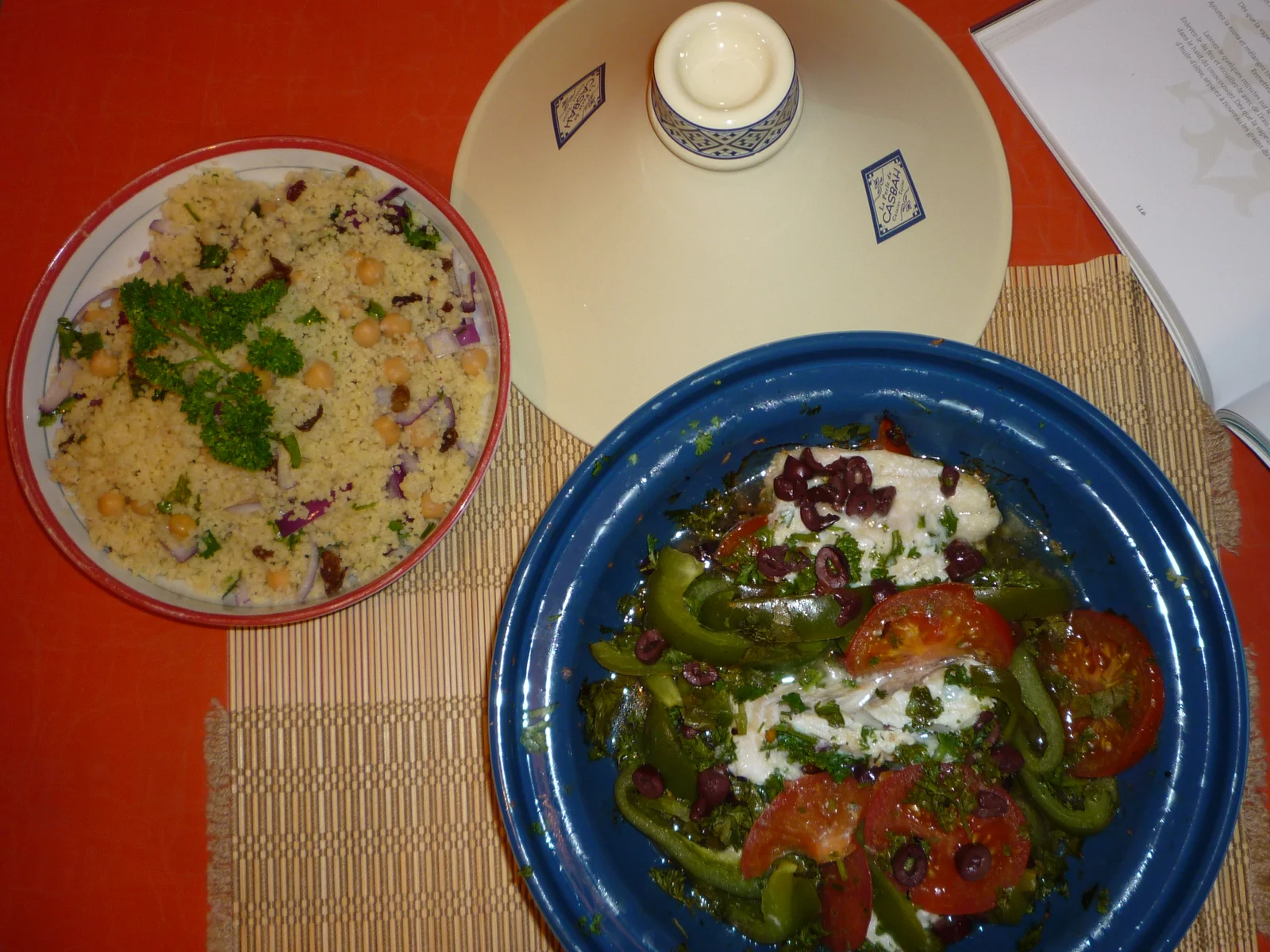
Couscous: a Friday institution
Couscous is not a quick side here — it is the Friday meal, the dish families gather for after midday prayers. Properly made, the fine semolina is steamed several times until light, then mounded with slow-cooked vegetables and meat, often with a sweet note of caramelised onion and raisins on top.
Because couscous is traditionally the Friday dish, that is the day to order it — many home-style restaurants only make it properly once a week, and a Friday couscous is a different thing from the reheated version offered on a Tuesday. Plan your best couscous meal around the calendar.
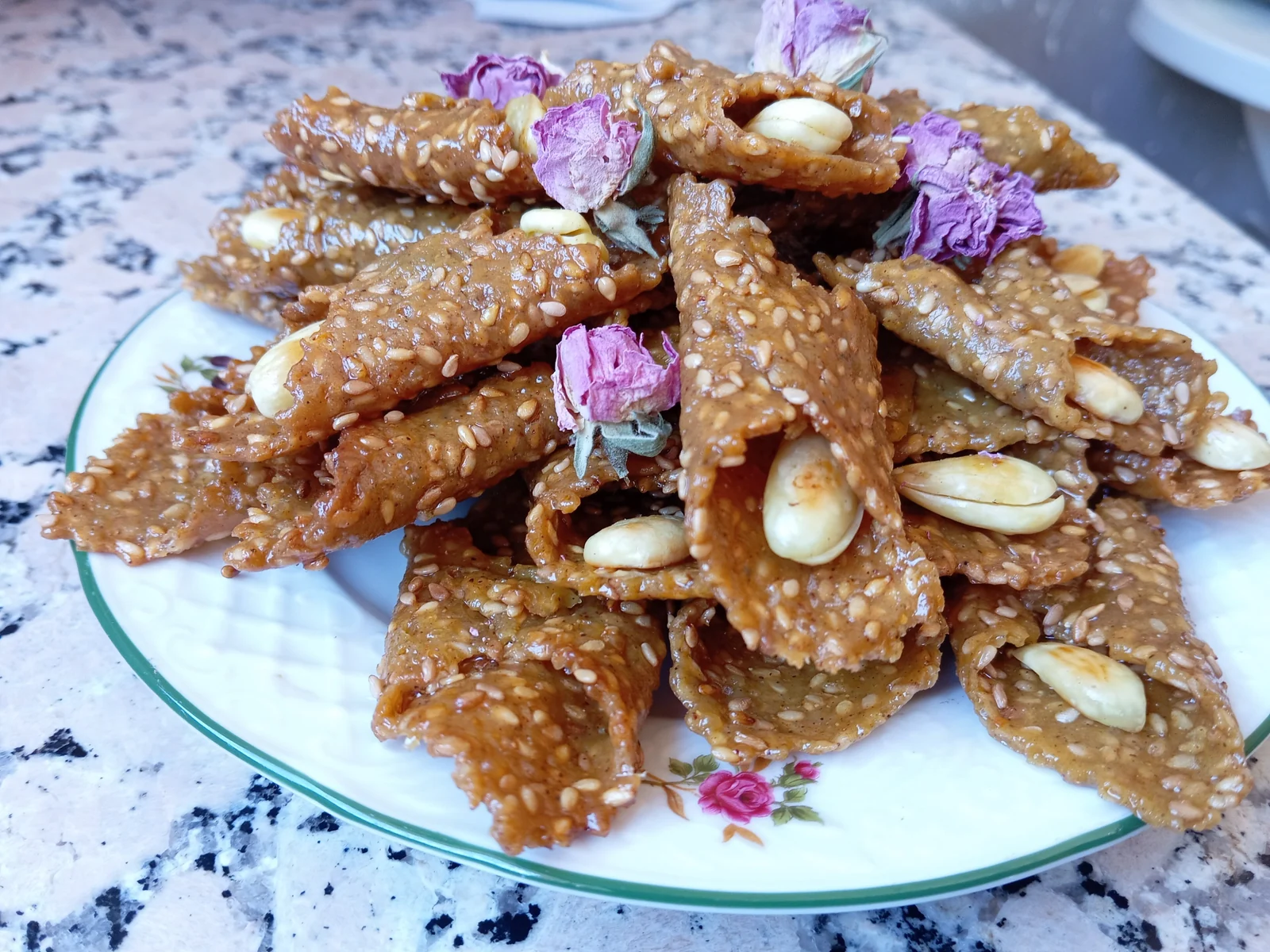
Pastilla and the dishes tourists miss
If you only branch out once, make it pastilla (b’stilla) — a thin, flaky pie that wraps spiced poultry in pastry and dusts the top with cinnamon and sugar. Sweet and savoury together sounds wrong and tastes extraordinary; it is the dish that converts skeptics. Traditionally pigeon, now usually chicken, and increasingly seafood on the coast.
Two more that menus aimed at tourists skip: harira, the hearty tomato-lentil-chickpea soup eaten to break the fast during Ramadan and served year-round, and mechoui, slow-roasted whole lamb pulled apart by hand. Ask for these and you eat like a local, not a visitor.
Where to eat: the five options in any city
Every Moroccan city offers the same five ways to eat, and they are not close to equal. This is how we rank them for our own travelers:
| Where | Good for | Our take |
|---|---|---|
| Café on the main tourist square | A cold drink and the view | Photo menus, safe food, forgettable cooking. Have the drink, eat elsewhere. |
| Home-style medina diner | Friday couscous, harira any day | Where the actual cooking is. No English menu is a good sign, not a problem. |
| Night stalls on a busy square | Brochettes, merguez, snail soup | Pick the stall with the longest local queue, not the friendliest tout. |
| Riad dinner | A quiet last night in | Worth doing once, but order pastilla a day ahead or you get the standard tagine. |
| Cooking class | Understanding the spice logic | The souvenir that lasts. Take the market trip that comes with it. |
The pattern behind the ranking: the further you get from a menu written in four languages, the better you eat. A half-day in Marrakech with a local guide mostly earns its money by walking you past the first category into the second.
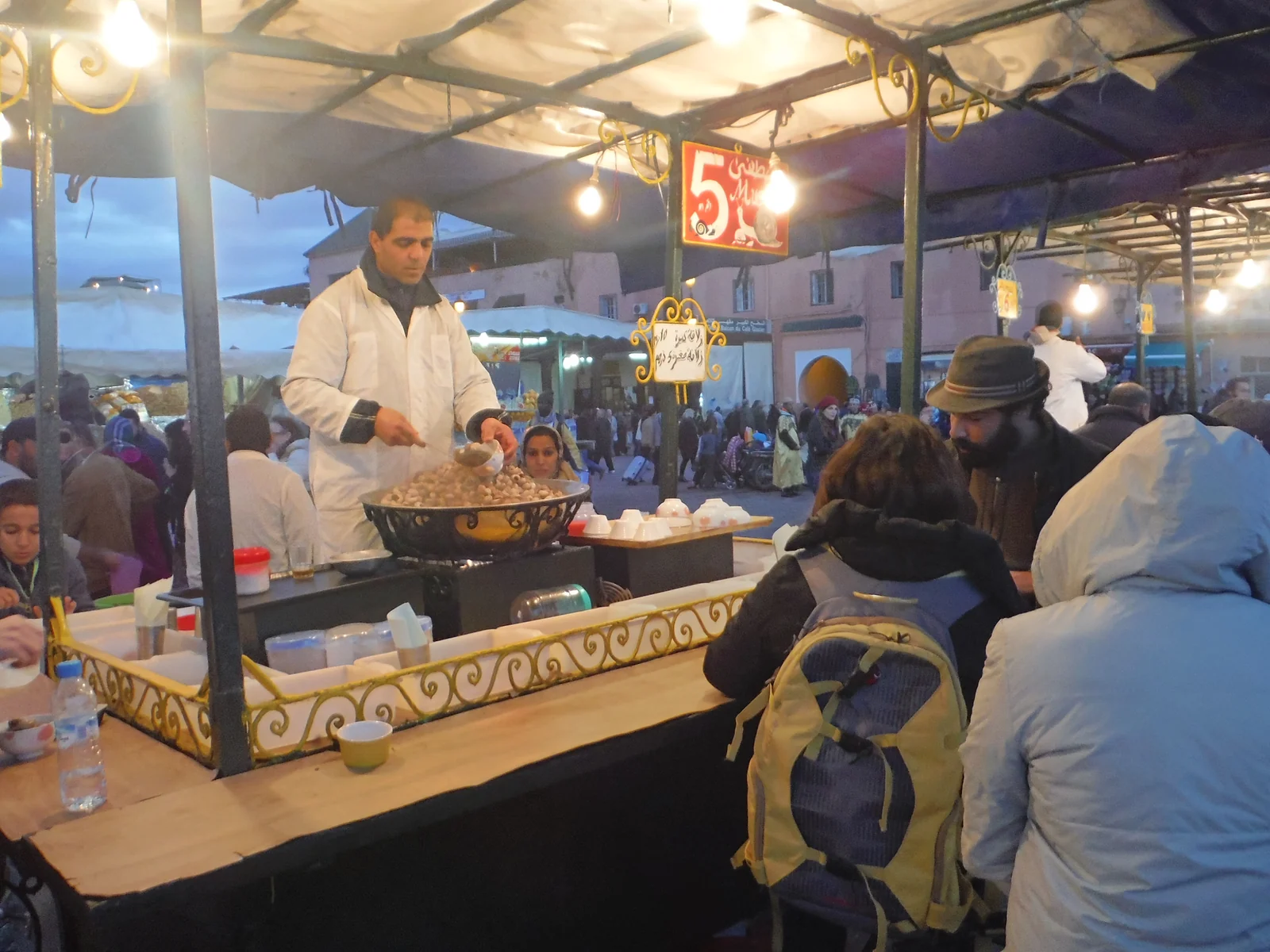
Street food: where the flavour hides
Some of the best eating in Morocco happens standing up. The night food stalls on Marrakech’s Jemaa el-Fnaa are the obvious arena — grilled brochettes, merguez sausage, and bowls of babbouche (snail soup) that locals queue for. Beyond the square: msemen (flaky griddle bread) for breakfast, bowls of bissara (fava-bean soup) on cold mornings, and fresh sfenj doughnuts.
The sensible rule for street food anywhere: eat where it is busy and the turnover is high, so the food is fresh and cooked in front of you. A packed stall with a queue of locals is safer than an empty tourist café. Follow the crowd and the smoke.
If you are carrying spices, dates or amlou home, the food market runs on the same rules as the rest of the souk. We tell our clients the final price usually lands near a third of the opening ask, and that walking away is the best price-finder there is. A bag of ras el hanout from a spice stall is the best-value thing you can take out of Morocco.
Mint tea: the national handshake
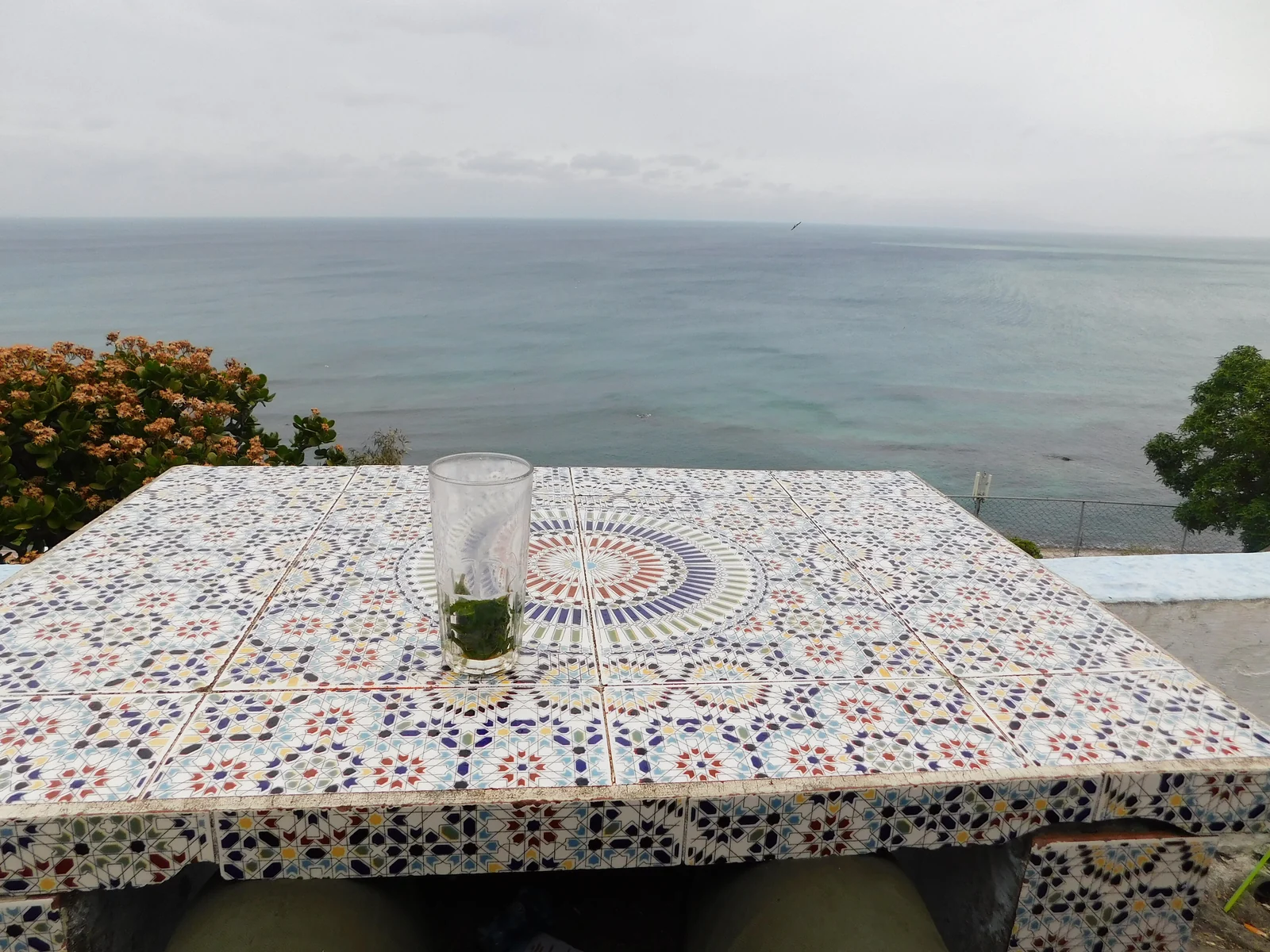
Mint tea — green tea, fresh mint, and a frankly heroic amount of sugar — is poured at every welcome, every sale and every meal’s end. It is poured from height to aerate it and build a little foam, and refusing the first glass is close to refusing a handshake. Locals half-joke that it is "Berber whisky".
Accept it. Some of the best conversations of your trip will happen over a glass you did not plan to drink, in a carpet shop you did not plan to enter. The tea is rarely about the tea.
Eating vegetarian (and eating safely)
Good news for vegetarians: Morocco is one of the easier places to eat meat-free. Vegetable tagines, couscous, lentil and bean soups, zaalouk (smoky aubergine), bakoula (cooked greens) and a table of small salads mean you will eat very well — just confirm the tagine was not built on a meat stock if you are strict.
On stomachs: most travellers are fine, but give yourself the basics. Drink bottled or filtered water, be a little careful with raw salads and pre-cut fruit early in the trip while you adjust, and lean on the busy, high-turnover places. The food is not the enemy; tiredness and dehydration usually are. Pair this with what to do in Morocco and the best time to visit to plan around it.
Questions fréquentes
What food is Morocco famous for?
Tagine (a slow-cooked stew named for its conical clay pot) and couscous are the icons, alongside pastilla (a sweet-savoury pie), harira soup, grilled brochettes and mint tea. The cuisine blends Berber, Arab, Andalusian and Mediterranean influences.
What is the difference between a tagine and couscous?
A tagine is a stew slow-cooked in a conical clay pot, eaten with bread. Couscous is steamed semolina topped with vegetables and meat, traditionally the Friday family meal. They are the two pillars of Moroccan home cooking.
What should I eat in Morocco as a first-timer?
Start with a chicken-and-preserved-lemon tagine, a proper Friday couscous, and pastilla if you can find it. Add mint tea, fresh bread with olive oil and amlou, and a night of street food on a busy square. Branch out to harira and mechoui when you can.
Is Moroccan food good for vegetarians?
Yes, very. Vegetable tagines, couscous, bean and lentil soups, smoky aubergine zaalouk and a spread of small salads make meat-free eating easy. Just check that tagines and couscous are not made with a meat-based stock if you are strict.
Is street food safe to eat in Morocco?
Generally yes, if you choose busy stalls with high turnover where food is cooked fresh in front of you. Drink bottled or filtered water, be cautious with raw salads and pre-cut fruit early in your trip, and follow where the locals queue.
What is Moroccan mint tea?
Green tea brewed with fresh mint and plenty of sugar, poured from height to aerate it. It is the national drink and a gesture of hospitality offered at welcomes, meals and in shops. Accepting a glass is part of the etiquette.
Vous voulez qu’on s’occupe de la logistique ?
Nous parcourons ces routes au quotidien. Donnez-nous vos dates et nous construirons le voyage autour de vous.
Youssef was born and raised in Fez and has guided travelers across Morocco for more than 12 years — from the Erg Chebbi dunes to the High Atlas passes. He co-founded Beyond the Riad to run honest, well-paced private trips with local drivers and guides.
En savoir plus sur nousLes photos des sections proviennent de Wikimedia Commons sous leurs licences Creative Commons respectives ; les crédits figurent sous chaque image.