Cities
Things to Do in Marrakech: The Honest First-Timer’s Guide
Co-founder & lead guide, Beyond the Riad
We run Marrakech half-days most weeks of the year — the route below is the one we actually walk with first-timers, not a top-ten someone scraped off other blogs.
- ~1,900
- private trips run since 2014
- 1 in 4
- of our trips is the 3-day Marrakech–Sahara loop
- ~⅓
- of the opening price is where souk haggling lands
Sights ranked from guiding them ourselves, not from a press kit.
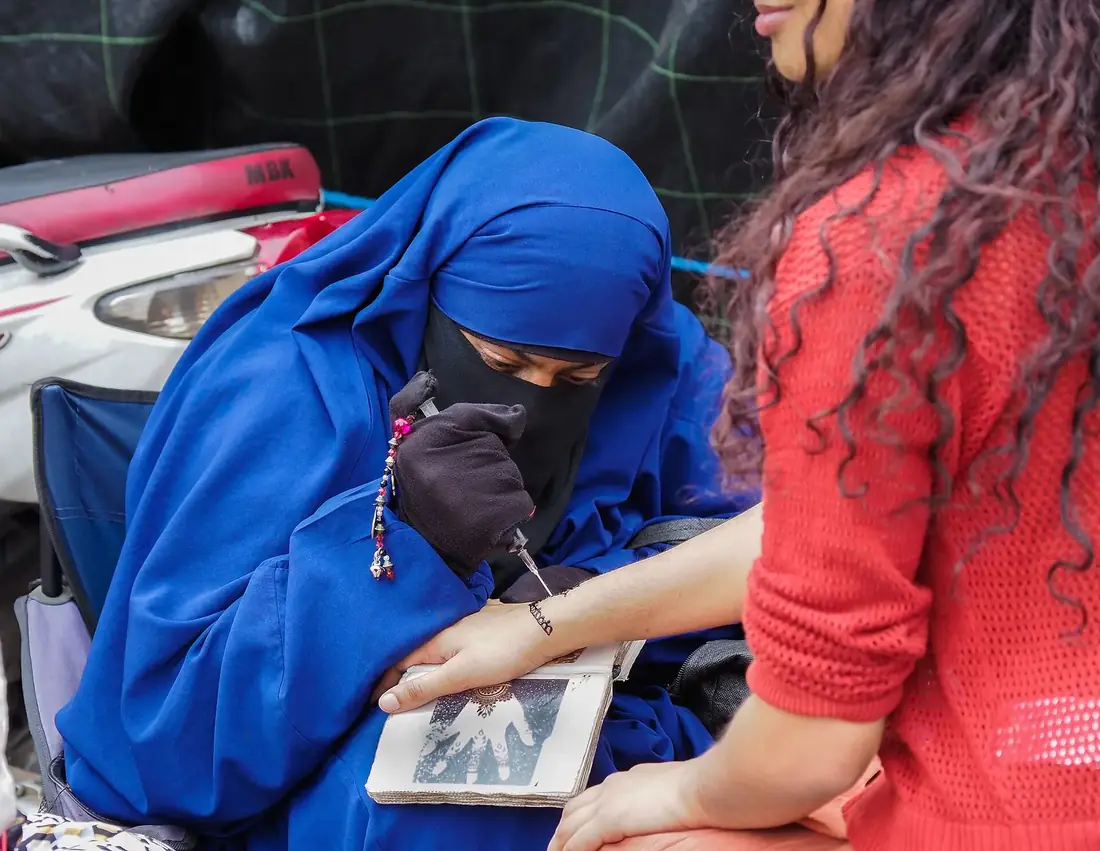
In two or three days in Marrakech you can comfortably cover Jemaa el-Fnaa and the souks, the Bahia Palace and Ben Youssef Madrasa, the Jardin Majorelle, and a hammam — then use a day for the Atlas mountains or a desert sunset. The old city is walkable; the gardens and new town need a taxi. Two full days is the sweet spot.
Marrakech is a city you either love in the first hour or want to flee from. It is loud, theatrical, occasionally pushy, and completely worth it once you stop fighting the chaos and start moving with it.
Here is what actually earns a place on a short visit — the unmissable, the quietly brilliant, and the one or two things that are more famous than they are good — plus how to handle the souks without leaving angry.
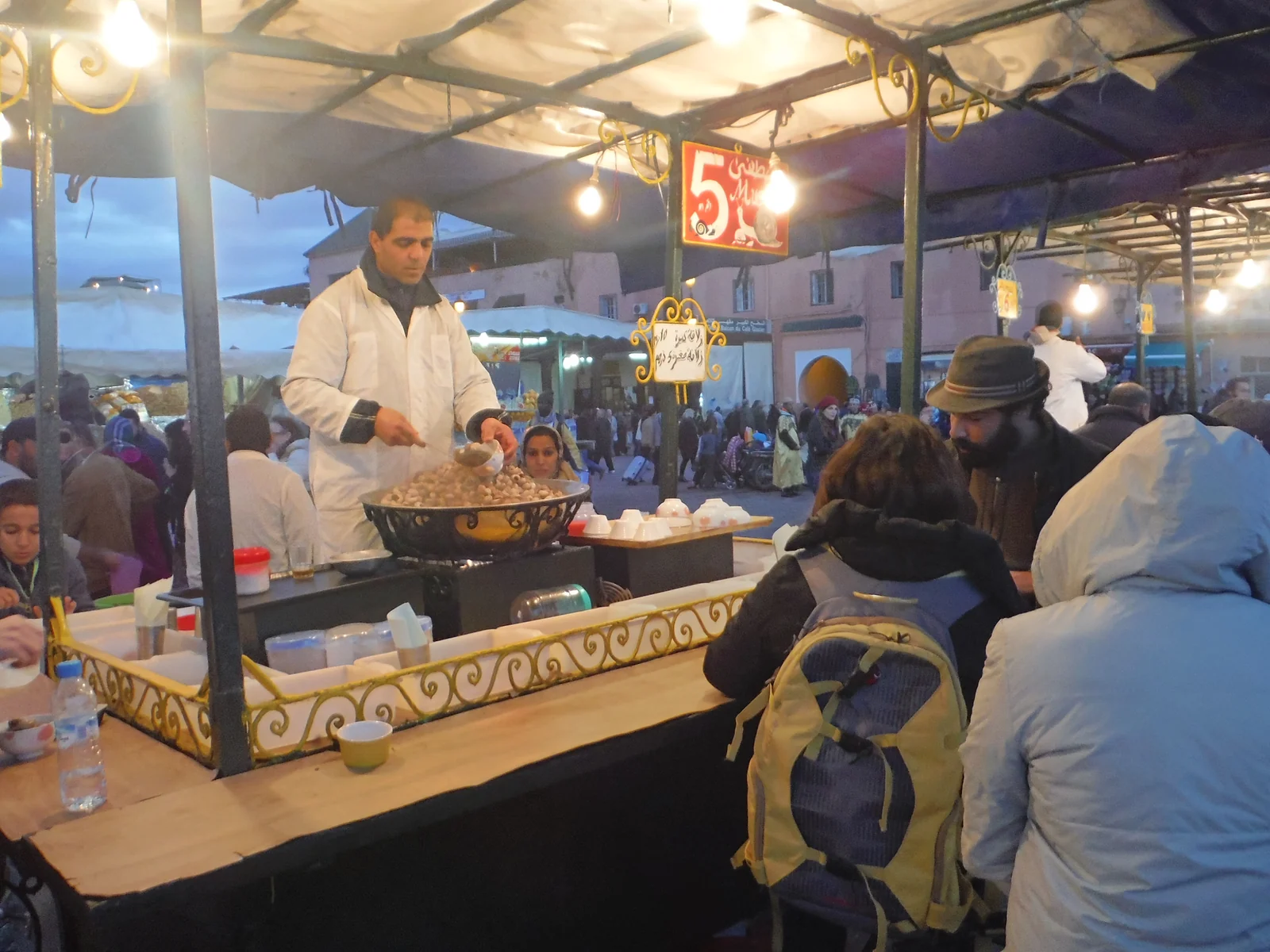
Jemaa el-Fnaa: go twice, day and night
The main square is the heart of the city and a UNESCO-listed piece of living heritage — not a museum, a working open-air theatre. By day it is orange-juice carts, snake charmers and henna artists; after dark it becomes the largest food court in Africa, with grill smoke, storytellers and Gnaoua musicians.
Go twice — once each side of sunset — because they are different places. Two honest warnings: agree a price before any henna or photo, and the snake and monkey acts involve mistreated animals, so most of us steer clients away. Eat at a busy stall, point at what you want, and check the bill.
Marrakech is the busiest stop in a country that drew a record 17.4 million visitors in 2024, so the square can feel like the whole world turned up at once. Here is how we rank the headline sights after years of guiding them:
| Sight | Time | Our take |
|---|---|---|
| Jemaa el-Fnaa | Go twice | Unmissable — day and night are different cities |
| The souks | 2–3 hrs | Get lost on purpose; haggle to about a third |
| Ben Youssef Madrasa | 45 min | The most beautiful stop — arrive at opening |
| Bahia Palace | 45 min | Worth it for the painted ceilings |
| Jardin Majorelle | 1 hr | Lovely, but book ahead — queues swallow an hour |
| Saadian Tombs | 30 min | Only if the queue is short; otherwise skip |
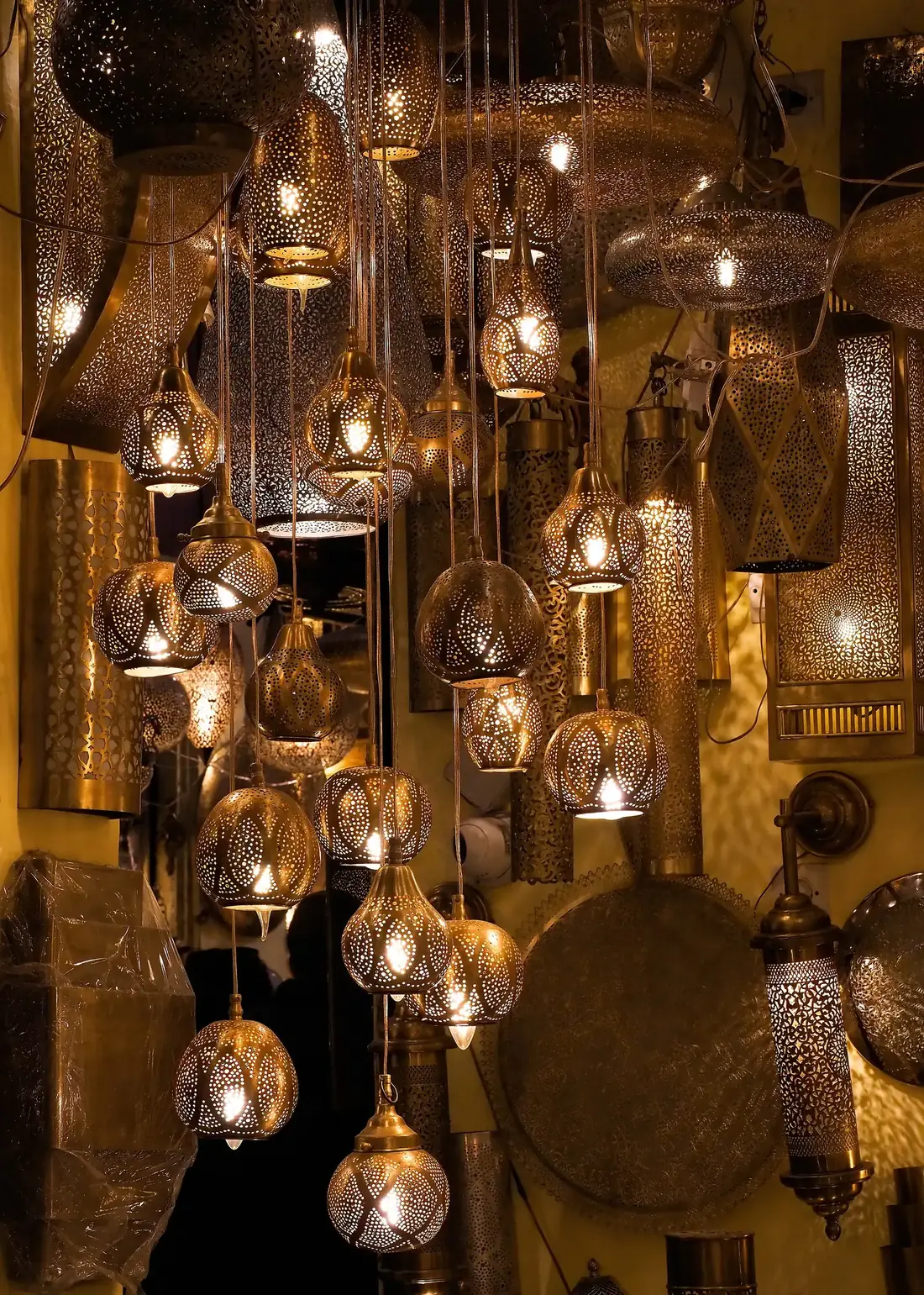
The souks: get lost on purpose
North of the square, the souks are a covered maze of leather, lanterns, spices, carpets and metalwork. Getting lost is the experience — it is too contained to stay lost for long, and you always pop out somewhere familiar eventually.
Haggling is expected and friendly. Start at roughly a third of the opening price, be willing to walk (the walk is the best price-finder there is), and keep it good-humoured. Ignore anyone insisting the tanneries or a "special Berber market" are "closing in five minutes" — they are not. A half-day with a licensed local guide is the fastest way to read the medina without the hustle.
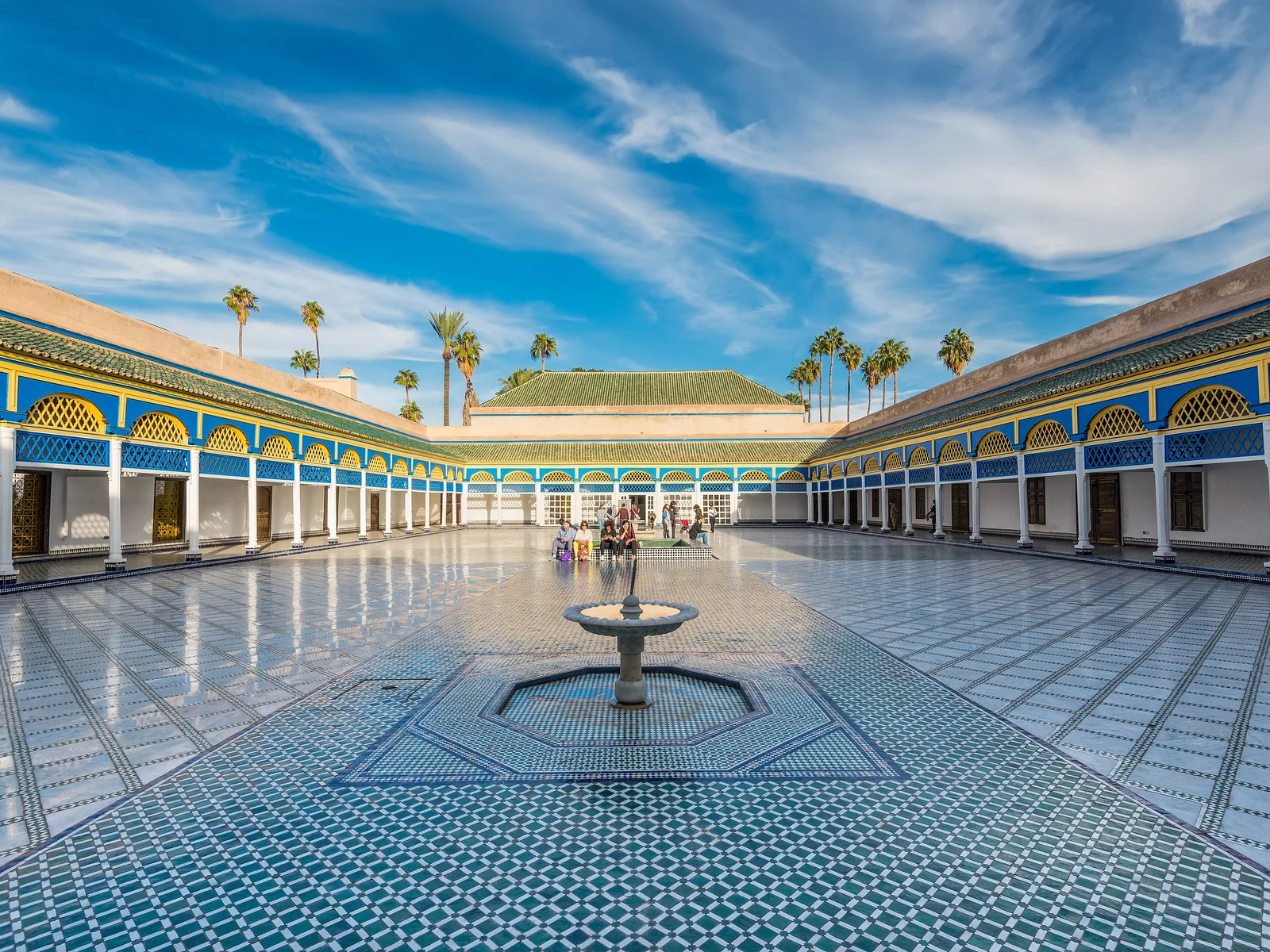
Bahia Palace and Ben Youssef Madrasa
For the architecture, two stops beat the rest. The 19th-century Bahia Palace is a sprawl of painted ceilings, marble courtyards and tiled rooms built to be the finest palace of its time. The Ben Youssef Madrasa — a centuries-old Quranic school reopened after a long restoration — is smaller but more breathtaking, with carved cedar, stucco and zellij around a still reflecting pool.
Go to the madrasa early, before the tour groups, and you can have that courtyard almost to yourself. The nearby Saadian Tombs are worth it only if the queue is short; if it snakes round the block, skip it without guilt.
The most breathtaking stop in the city and the one we send people to first. Get there when it opens and the courtyard is almost yours; by mid-morning it is shoulder to shoulder and the magic thins out fast.
Jardin Majorelle and a slower afternoon
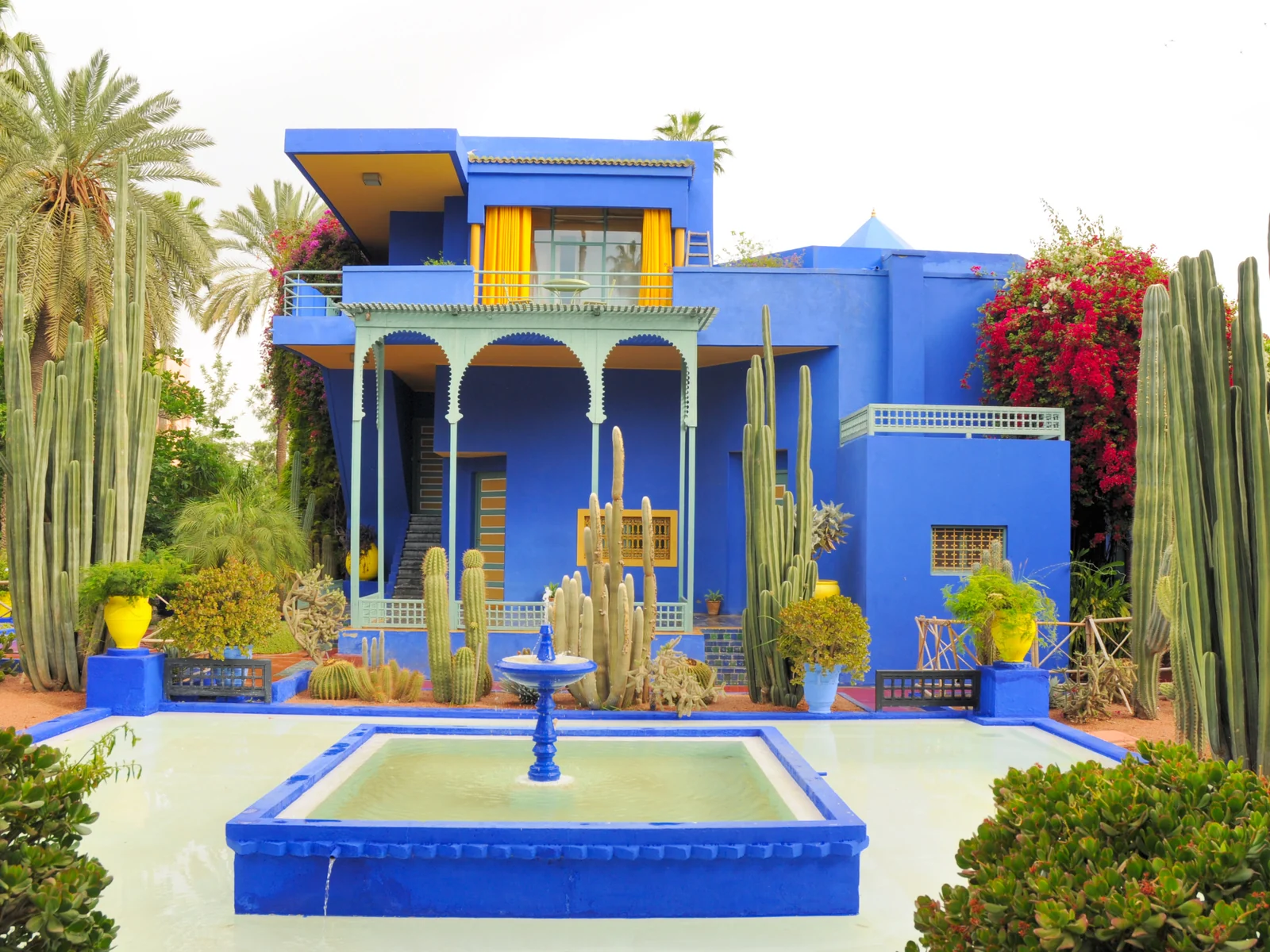
When the medina gets to be too much — and it will — the Jardin Majorelle is the antidote. The cobalt-blue garden that Yves Saint Laurent bought and saved in 1980 is a cool, planted, quiet world of bamboo and cactus, with the small Berber Museum and the YSL Museum next door.
Majorelle is small and very popular, and the on-the-day queue can swallow an hour. Book a timed ticket in advance and go right at opening. If it is fully booked, the Secret Garden (Le Jardin Secret) in the medina is a calmer, cheaper alternative.
A hammam — do it properly
A hammam — a steam bath and scrub — is the most Moroccan thing you can do indoors, and the city offers two versions. Tourist spa hammams are gentle, scented and pricey. Public neighbourhood hammams are a few dirham, blunt, and the real thing. Either way you leave a layer of skin behind and feel reborn.
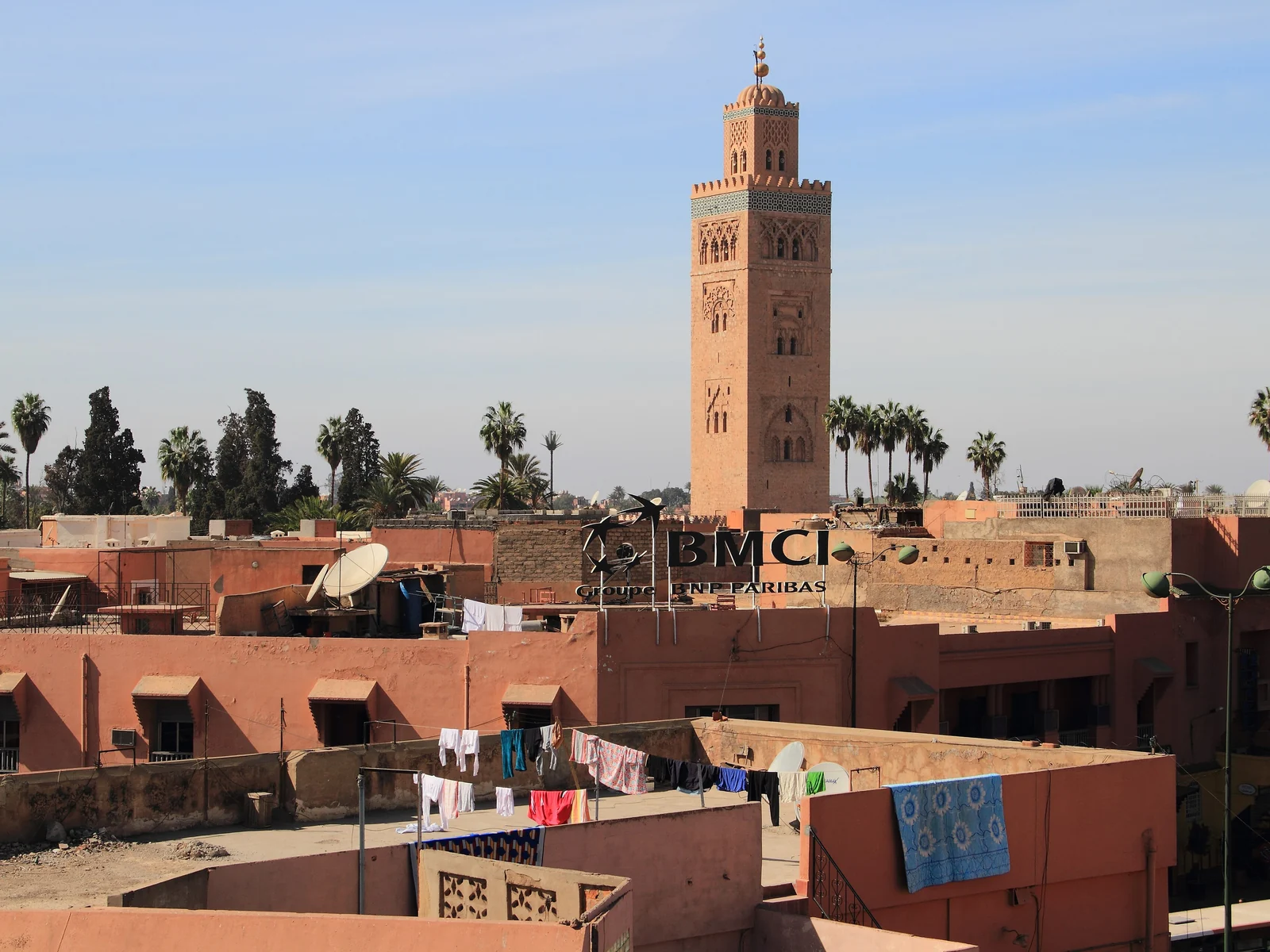
Use the 77-metre Koutoubia minaret as your compass while you wander — it is the tallest thing in the medina and visible from most of it, which is how locals navigate too. Non-Muslims cannot enter the mosque, but the gardens around it are a fine place to reset.
The best day trips out of the city
Two or three days in is the moment to swap the noise for space. The closest escapes:
- The High Atlas (Imlil / Ourika) — an hour out for valley walks, Berber villages and mint tea, on a trip like the Asni and Ourigane day.
- Agafay desert — not the Sahara, but a stony, rolling "desert" 40 minutes away that is perfect for a sunset camel ride and dinner when you have no time for the real dunes.
- Essaouira — the breezy Atlantic walled town, two and a half hours away, for seafood and a complete change of pace.
Want the full menu? See the dedicated guide to the best day trips from Marrakech, and time it all with the best time to visit Morocco.
The thing we most often fix on the ground: people try to "do" Marrakech in a day on a stopover. Give it two nights. The city only stops feeling like an ambush once you have slept in it.
Questions fréquentes
How many days do you need in Marrakech?
Two full days covers the square, the souks, the main palaces and a garden at a comfortable pace. A third day lets you add a hammam and a half-day trip to the Atlas, Agafay or Essaouira.
What are the must-see attractions in Marrakech?
Jemaa el-Fnaa, the souks, the Bahia Palace, the Ben Youssef Madrasa and the Jardin Majorelle are the core five. Add a hammam and an Atlas or desert day trip if you have the time.
Is Marrakech safe for tourists?
Yes, broadly. The main issues are pushy salespeople, unofficial "guides" and overcharging rather than real danger. Agree prices upfront, keep valuables close in the souks, and use a licensed guide if the medina feels overwhelming.
How do you haggle in the Marrakech souks?
Start at about a third of the first price, stay friendly, and be ready to walk away — walking is what reveals the real price. Decide what the item is worth to you beforehand and do not feel pressured by "special price" patter.
Do you need a guide in Marrakech?
Not strictly — the medina is contained and you will always find your way out. But a licensed half-day guide saves time, adds the history and context the stones do not give you, and shields you from the worst of the hustle.
What should you not do in Marrakech?
Skip the snake-charmer and monkey photos (the animals are mistreated), do not follow anyone who says a site is "closing now", and avoid handing over a phone for a photo without agreeing on a tip first.
Vous voulez qu’on s’occupe de la logistique ?
Nous parcourons ces routes au quotidien. Donnez-nous vos dates et nous construirons le voyage autour de vous.
Youssef was born and raised in Fez and has guided travelers across Morocco for more than 12 years — from the Erg Chebbi dunes to the High Atlas passes. He co-founded Beyond the Riad to run honest, well-paced private trips with local drivers and guides.
En savoir plus sur nousLes photos des sections proviennent de Wikimedia Commons sous leurs licences Creative Commons respectives ; les crédits figurent sous chaque image.